



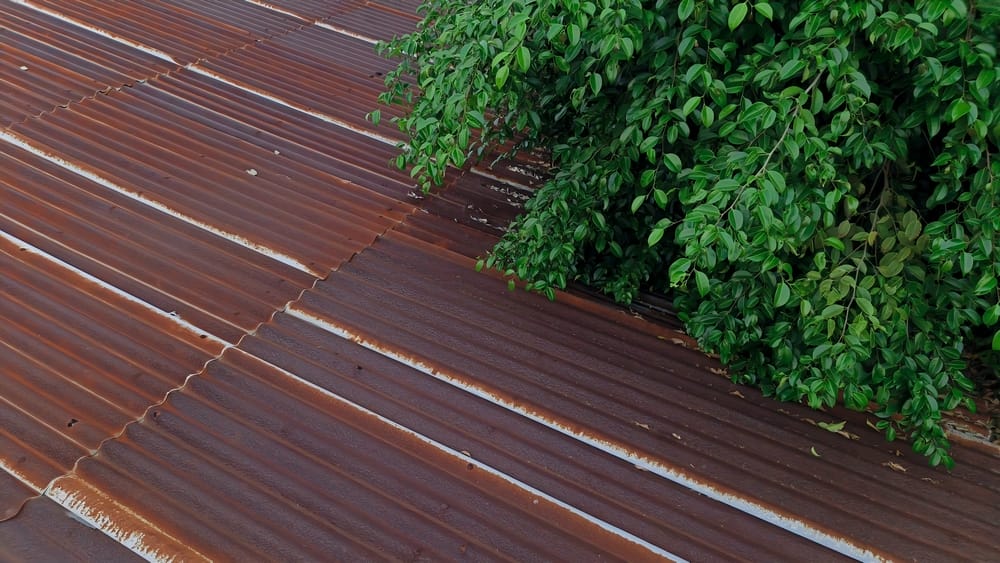
Metal roofs are built to last. Whether you have standing-seam steel, galvanized panels, or aluminum sheeting, a well-maintained metal roof can protect a home for decades in Quebec’s demanding climate. But rust is a persistent enemy, and the freeze-thaw cycles, road salt carried by wind, and heavy spring runoff that define this region create conditions where even quality metal can begin to oxidize before its time.
The good news is that rust does not always mean replacement. When caught early, corrosion on a metal roof can be treated, patched, and sealed so that the roof continues to perform well for years to come. The challenge is knowing how to read the signs correctly, choosing the right products and methods, and understanding when a repair truly solves the problem versus when it only delays a larger expense.
This guide covers everything a homeowner or property manager needs to know about metal roof rust: how it starts, where it concentrates, how to treat it at every stage, and when a full replacement is the smarter long-term investment.
Key Points: Repairing a Rusty Metal Roof in Quebec
- Rust falls into two categories with very different implications: surface oxidation that can be treated with cleaning and coating, and perforation that requires physical patching or panel replacement.
- The most vulnerable spots on any metal roof are around fasteners, at panel overlaps, near gutters, and along any cut or exposed edges where the protective coating has been broken.
- A proper repair follows a three-stage process: strip and clean the corroded area, apply a rust converter to neutralize remaining iron oxide, then restore the surface with a patch, new panel, or anti-rust paint.
- Preventive coatings and regular joint sealing are the most cost-effective tools for extending roof life, especially in Quebec where thermal expansion stresses the metal every season.
- When rust affects more than 30% of the surface, or when panel deformation and multiple perforations are present, a full replacement becomes the more economical choice over a 20-to-40-year horizon.
Understanding Rust on a Metal Roof
The Difference Between Surface Rust and Perforation
Not all rust is the same, and the distinction between surface oxidation and structural perforation determines the entire scope of a repair job.
Surface rust appears as orange or brownish discoloration on the outer coating of a metal panel. At this stage, the corrosion has not yet eaten through the metal itself. It is confined to the protective layer, whether that is galvanizing, paint, or a factory-applied finish. Surface rust is almost always treatable without replacing any material. The window for action is real, though: left untreated through even one Quebec winter, surface rust can deepen significantly as moisture freezes and expands in microscopic pits.
Perforated rust is a different situation entirely. Here, the corrosion has worked all the way through the panel, creating holes that range from pinprick-sized to visibly open gaps. Perforated metal no longer keeps water out. The panel has also lost structural integrity, which becomes relevant in a heavy snowload environment. At this stage, patching is sometimes viable for small isolated areas, but the repair demands more skill and more material than a surface treatment.
The practical test is simple. Run a gloved hand across the surface in question. If the metal feels solid but shows discoloration, you are likely dealing with surface rust. If the surface feels soft, crumbles under light pressure, or shows visible holes, perforation has occurred. A flashlight inspection from the attic can confirm whether any light is penetrating through.
Where Rust Tends to Concentrate
Rust rarely attacks a metal roof uniformly. It develops in specific zones where conditions favor moisture retention and coating failure. Knowing these zones helps with targeted inspections and proactive maintenance.
Fastener points are among the first to show rust. Screws and nails penetrate the metal panel, and even galvanized hardware loses its protective coating over years of exposure. Where the fastener meets the panel, a micro-gap often forms as the material expands and contracts through seasonal temperature swings. Moisture gets in, oxygen gets in, and corrosion begins from the inside out.
Panel overlaps are similarly vulnerable. Two layers of metal trapping a thin film of water between them create ideal conditions for oxidation, especially if the sealant at that joint has dried out or cracked. The same logic applies to roof flashing and joints, where dissimilar materials meet and small movements over time can open gaps in the seal.
Gutter-adjacent areas see more moisture for longer periods than any other part of the roof. Debris collects there, holds water against the metal, and blocks drainage. It is common to find the worst rust concentrated in the bottom two feet of a roof slope, precisely where water lingers before draining into the gutter.
Cut edges are the most structurally exposed points on any metal panel. When sheet metal is trimmed on site, the factory coating is severed cleanly, leaving raw metal exposed. Without a post-cut treatment, these edges begin to oxidize quickly. Installers who apply edge sealant consistently will see far less rust along trim lines than those who do not.
How to Repair Rust on a Metal Roof Step by Step
Step 1: Cleaning and Stripping the Corroded Area
Every successful metal roof rust repair begins with thorough surface preparation. Applying any treatment over loose rust or contaminated metal produces a result that fails quickly.
Start by removing debris from the area: leaves, dirt, and organic material that may be holding moisture against the surface. A stiff brush handles this well. Then address the rust itself. A wire brush works for light surface oxidation and can reach into tight spots around fasteners. For larger areas of deeper rust, an angle grinder fitted with a wire wheel or flap disc removes material faster and more consistently. The goal is to expose clean, solid metal around the entire perimeter of the affected zone.
After mechanical removal, wipe the surface thoroughly with a clean cloth dampened with acetone or a dedicated metal degreaser. This step is often skipped and almost always regretted: oil residue, solvent traces, or dust left on the surface will prevent coatings from bonding properly.
Protective gear matters here. Safety glasses and heavy work gloves are non-negotiable when using grinding equipment. If working at roof height, a properly secured ladder or safety harness is required regardless of roof pitch.
Step 2: Applying a Rust Converter
Once the surface is clean and dry, a rust converter should be applied to any area where traces of corrosion remain. Even after thorough mechanical stripping, microscopic iron oxide particles remain embedded in the metal surface. Left untreated, these will continue to rust beneath whatever coating is applied over them.
A rust converter is a chemical treatment that reacts directly with iron oxide and transforms it into iron tannate, a stable dark compound that does not continue to corrode and bonds well with paints and primers. It is not a paint itself, and it does not fill holes or level uneven surfaces. Its job is to chemically neutralize what mechanical cleaning cannot fully eliminate.
Application is straightforward: brush or roll the converter onto the cleaned surface and allow it to react fully according to the manufacturer’s specifications, which typically means leaving it undisturbed for at least 24 hours. The treated area will darken noticeably, which is confirmation that the chemical reaction has occurred. Do not rinse the surface after treatment. The converter product stays in place and becomes part of the substrate for the next coating layer.
Step 3: Patching, Repainting, or Replacing the Panel
The final step depends on whether the rust produced perforation or remained at the surface level.
For surface rust with no perforation, the repair concludes with the application of an anti-rust metal paint or direct-to-metal (DTM) coating. These products contain corrosion inhibitors that actively resist future oxidation rather than simply sealing the surface. Two thin coats applied with a brush or roller will last significantly longer than a single heavy coat. Color choice matters in Quebec: darker colors absorb more heat, which can increase panel expansion and stress at the edges in summer. A lighter or reflective color is a practical choice for sun-exposed slopes.
For perforated areas, a physical patch is required before repainting. Cut a piece of galvanized sheet metal large enough to overlap the damaged area by at least two inches on all sides. Fasten it with self-drilling screws fitted with neoprene sealing washers, which compress to form a watertight seal at each fastener point. Apply a waterproof roofing sealant around the full perimeter of the patch, pressing it firmly into the joint between the patch and the existing panel. Once the sealant has cured, paint over the entire repaired area with anti-rust coating to unify the surface and provide additional protection.
When a panel is too badly damaged for a patch, full panel replacement is the appropriate course. Remove the fasteners securing the panel in question, taking care not to damage the adjacent panels in the process. Install the replacement panel following the original overlap direction and fastener pattern. This work is manageable for an experienced DIYer on a low-pitch roof, but on steeper slopes or for larger affected areas, the roof repairs and maintenance professionals at Morin Roofing bring both the equipment and the material knowledge to complete the job safely and correctly.
Preventive Treatments That Extend Metal Roof Life
Anti-Rust Paint and Protective Coatings
The most cost-effective investment in a metal roof is routine preventive coating. Anti-rust paints are formulated with inhibiting agents that prevent the electrochemical reaction between iron, oxygen, and water that produces rust. They are not purely decorative: even when a coating looks intact from the street, its active chemistry is working against corrosion at the molecular level.
Protective varnishes serve a complementary purpose on pre-finished or painted panels. A clear varnish layer seals the factory finish against UV degradation and moisture penetration, preserving both the appearance and the protective function of the original coating. Reapplication every several years on high-exposure surfaces is a reasonable preventive schedule.
The application technique affects longevity as much as the product selection. Two thin coats always outperform one heavy coat in terms of adhesion, coverage uniformity, and resistance to peeling. Each coat should be allowed to dry fully before the next is applied. In Quebec’s spring and fall seasons, temperature and humidity fluctuate enough to affect drying time, so check the product specifications for application conditions.
Sealing Joints Against Moisture Intrusion
Joint integrity is one of the most underappreciated factors in metal roof longevity. Every point where two panels overlap, where a panel meets a flashing, or where a penetration passes through the roof surface is a potential entry point for water. Water that enters and sits between layers of metal drives corrosion at a rate that open-air exposure cannot match.
High-quality sealant at every overlap and penetration point should be treated as a maintenance item with a finite service life. Polyurethane or butyl-based roofing sealants hold up well through freeze-thaw cycles, but they do eventually harden, crack, and pull away from the substrate. An annual inspection that includes pressing lightly on sealant lines and checking for cracking or separation takes very little time and can prevent a significant amount of water infiltration.
Bitumen or EPDM sealing tape applied at panel overlaps during installation or re-roofing provides a compressed gasket effect that performs well even as the panel settles. For older roofs where tape was not used originally, a bead of fresh sealant pressed firmly into the overlap joint is a practical retrofit.
When Replacement Is the Right Decision
Signs That Rust Has Advanced Too Far for Repair
There comes a point where the honest answer to a rust problem is that repair is no longer the economically rational choice. Recognizing that threshold early saves money and prevents the anxiety of a roof that is patched repeatedly without ever becoming reliable.
The clearest indicator is surface area. When rust and perforation affect more than roughly 30% of the roof, the cost of materials and labor for comprehensive repairs approaches or exceeds the cost of replacement, with none of the long-term durability that a new roof provides. A roof at 30% damage today is typically at 50% within two or three Quebec winters.
Panel deformation is another decisive sign. Metal that has corroded deeply often buckles or warps as its structural integrity degrades. Deformed panels no longer shed water consistently, create new pooling zones that accelerate further corrosion, and are difficult to patch effectively because the geometry of the surface has changed.
Multiple isolated perforations scattered across the entire roof surface, rather than concentrated in one repairable zone, indicate that the corrosion is systemic rather than localized. Patching individual holes at that stage is a holding action, not a solution.
Comparing the Long-Term Cost of Repair Versus Replacement
A localized rust repair is genuinely cost-effective when the damage is limited, the rest of the roof is in good condition, and the repair extends a serviceable life by a meaningful number of years. The materials are inexpensive, the labor is modest, and the result can add a decade to a well-maintained roof.
Full replacement carries a higher upfront cost, but it comes with a service life of 20 to 40 years depending on the material chosen. Considering options like modern roofing materials with extended durability at the time of replacement can also improve insulation performance, reduce thermal cycling stress on the new roof, and lower long-term maintenance costs. The calculation that matters is cost per year of protection, not total upfront price.
For commercial buildings in particular, where roof failure carries business interruption risk in addition to repair cost, the case for replacement over repeated patching becomes compelling earlier in the deterioration curve.
Conclusion
Rust on a metal roof is a manageable problem at the surface stage and a serious one once perforation sets in. The difference between a minor maintenance task and a major repair project often comes down to inspection timing. Quebec’s climate does not give metal roofs a gentle off-season: thermal cycling, ice damming, and spring saturation work year-round to stress coatings and open joints. An annual inspection, prompt treatment of early rust, and consistent joint sealing are the habits that turn a 20-year roof into a 35-year one.
When the damage is beyond what preventive care and targeted repairs can address, replacement with quality materials is the investment that makes financial sense over the full ownership horizon. Whether you need a professional assessment of your current roof’s condition or are ready to plan a repair or replacement project, the team at Morin Roofing is available to help.
Frequently Asked Questions About Metal Roof Rust Repair
Can I repair rust on a metal roof myself?
Surface rust on a low-pitch or easily accessible metal roof is a realistic DIY project if you are comfortable working at height and have the right tools. Wire-brushing, rust converter application, and repainting with an anti-rust product are all manageable steps for a careful homeowner. That said, perforated metal, widespread corrosion, or damage on a steep slope involves safety and technical considerations where professional assistance is worth the cost. An incorrect patch on a perforated panel can fail within a single season if the sealant is not applied correctly or the fasteners are not properly matched to the metal gauge.
What exactly is a rust converter and how does it work?
A rust converter is a chemical treatment applied directly to corroded metal surfaces. It reacts with iron oxide to form iron tannate, a stable dark compound that does not continue to corrode and adheres well to subsequent coatings. Unlike paint, it does not simply cover the rust: it transforms it chemically so that the underlying reaction is stopped. It is applied after mechanical cleaning, left to cure for at least 24 hours, and then overcoated with primer or anti-rust paint. It is one of the most important products in any metal roof repair sequence because it addresses the residual oxidation that wire brushing alone cannot eliminate.
How do I know whether to repair my rusty metal roof or replace it entirely?
The key factors are the percentage of surface area affected, whether perforation is present, and whether the panel geometry has been compromised by deformation. When rust is localized to specific spots covering less than 30% of the total surface, repair is typically the right choice. When damage is widespread, when panels are visibly warped, or when the roof has already been patched multiple times without lasting results, replacement is the more economical decision when measured over a 10-to-20-year timeframe. A professional inspection gives you accurate data on which side of that line your roof sits.
What type of paint works best on a rusty metal roof?
After rust converter treatment, use a direct-to-metal (DTM) anti-rust paint or a two-component epoxy metal coating. These products are formulated with corrosion inhibitors that continue to protect the metal even if the painted surface is scratched or chipped over time. Avoid standard exterior paints, which lack the adhesion and inhibiting chemistry that metal requires. Apply two thin coats rather than one heavy one. For Quebec’s climate specifically, choose a formulation rated for wide temperature ranges, since the surface temperature of a metal roof in direct summer sun can reach well above ambient air temperature.
What is the best way to prevent rust on a metal roof in Quebec?
The most effective prevention combines regular inspection, prompt sealing of any joint or fastener gap that shows wear, and periodic recoating of high-risk areas like cut edges, fastener points, and panel overlaps. Keeping gutters clear so water does not pool against the roof edge extends coating life considerably. Inspect at least once per year, ideally in late spring after snowmelt and again in early fall before freeze-up. Address any area where paint is peeling or sealant is cracking immediately, before moisture has a chance to reach the bare metal beneath.