



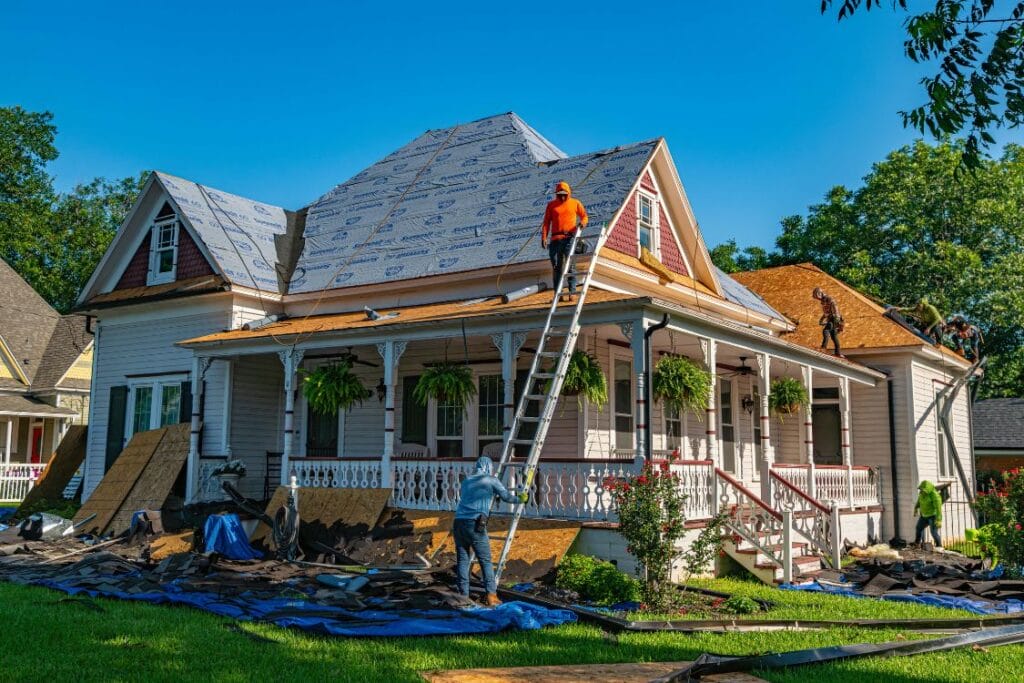
Most roofs do not fail suddenly. They degrade gradually over years of exposure to sun, rain, wind, and the freeze-thaw cycles that define Ottawa winters. The problem is that homeowners rarely spend time on or near their roofs, so the early warning signs of deterioration go unnoticed until the roof is leaking and the damage has already spread to the insulation and framing below.
Knowing what to look for, both from the ground and during a basic interior check, can make the difference between catching a roof at the point where targeted repairs still make sense and discovering a problem only after a full replacement has become unavoidable. The seven signs described here are among the strongest indicators that a roof has moved beyond the zone of routine maintenance and into territory where replacement is the responsible course of action.
Key Points for Spotting a Roof in Decline
Understanding these basics helps make sense of what you are looking at during any roof inspection:
- Shingles have a granule coating that protects the asphalt layer from UV degradation; loss of granules can shorten the remaining service life.
- Repeated freeze-thaw cycles can cause roofing materials to expand and contract, gradually affecting shingles, seams, and joints.
- Water travels horizontally through a roof assembly before dropping to a ceiling, so interior stains rarely appear directly below the actual entry point.
- A roof that is visually damaged in one area often has hidden deterioration across a wider section, because the same conditions that damaged the visible area affected the rest of the roof as well.
- The 15 to 20-year mark is the typical replacement window for standard asphalt shingles installed in Ottawa conditions.
- Early replacement of a failing roof is generally less expensive than repairing the structural damage that a delayed replacement allows to accumulate.
Sign 1: Granules Are Collecting in the Gutters
Asphalt shingles are coated with mineral granules that protect the underlying asphalt from ultraviolet radiation. When shingles are new, the granules are firmly embedded. As shingles age, the bonding material breaks down and granules begin to loosen, washing into the gutters every time it rains.
Checking your gutters after a rain is one of the easiest ways to monitor shingle condition. A small amount of granule shedding is normal on newer roofs as loose manufacturing excess washes away. Heavy granule accumulation on a roof that is more than 10 years old can indicate that shingles are losing their protective layer, though granule loss can also result from hail, foot traffic, or manufacturing variation.
Bald patches on the shingle surface itself, visible from the ground using binoculars, can indicate that granule loss is well advanced. Once the asphalt is exposed, deterioration accelerates quickly in Ontario’s summer heat and winter cold cycles.
Sign 2: Shingles Are Curling, Buckling, or Cracking
Healthy shingles lie flat against the roof deck. Shingles that are starting to cup upward at the edges, or that bow in the middle in a wave-like pattern, are responding to moisture imbalance, age-related brittleness, or inadequate ventilation. Both curling and buckling compromise the water-shedding function of the shingle surface and create entry points for windblown rain.
Cracking is a separate but related sign. Asphalt becomes brittle with age and thermal cycling. Shingles that show surface cracks or that break cleanly when disturbed have lost the flexibility needed to move with the structure during temperature changes. Cracked shingles break easily under ice load and foot traffic, and they allow water to penetrate to the felt underlayment below.
A roof with widespread curling or cracking across multiple sections may be past the point where replacing individual shingles makes economic sense. The same age and exposure conditions that caused the visible damage likely affected the rest of the roof surface to a similar extent.
Sign 3: Flashing Is Rusted, Cracked, or Lifted
Flashing is the metal sheeting installed at all vulnerable transition points, including where the roof meets the chimney, around skylights, along walls, and in roof valleys where two planes meet. It is designed to direct water away from these joints and prevent infiltration at the most leak-prone locations on any roof.
Steel flashing corrodes over time, particularly where sealant has cracked and allowed water to pool in the joint. Aluminum flashing is less prone to rust but can crack and lift when sealant fails. Flashing that has been sealed and re-sealed multiple times over the years reaches a point where there is no longer enough sound material to hold a new seal reliably.
When both the flashing and surrounding shingles are deteriorated, replacing them together may be the more practical approach. If you have already had flashing repaired or replaced once on your current roof, it is worth factoring that into your overall assessment of the roof’s condition.
Sign 4: Water Stains or Wet Spots Are Visible in the Attic
Go into your attic on a bright, sunny day and look up at the underside of the roof decking. Staining, discoloration, and any daylight visible through gaps or cracks are all evidence that water is finding its way in. Pay particular attention to areas around any penetrations and along the perimeter where the roof deck meets the exterior walls.
Feel the decking for soft spots or spongy areas. Wood that has been wet and dried repeatedly loses strength and may crumble or compress underfoot before it shows obvious discoloration. Insulation that clumps together or feels damp is holding moisture that should not be there.
Mold or mildew growth on the attic framing and decking surfaces indicates that moisture has been present long enough for biological growth to establish. This is a serious finding that points not just to a roof replacement need but potentially to additional remediation work on the structure.
When attic moisture damage is found, professional roof repair and maintenance should begin with a complete assessment, because the affected area may extend beyond the visible leak.
Sign 5: The Roof Is 20 or More Years Old
Age alone is not a definitive sign that a roof must be replaced immediately, but it is a reliable predictor of where a roof stands in its overall lifecycle.
If your roof is approaching or past the 20-year mark and you are beginning to notice any of the other signs described in this article, the decision is becoming clearer. A roof inspection at this age is particularly valuable because it gives you documented information about actual condition rather than relying on a general age estimate.
Roofs that were installed over existing shingles, rather than with a full tear-off, often show signs of failure sooner than their stated age would suggest, because the old material beneath retains heat and moisture that accelerates the degradation of the new layer above it.
Sign 6: Your Energy Bills Have Increased Without an Obvious Cause
A well-functioning roof works in combination with your attic insulation and ventilation to maintain the thermal envelope of your home. When a roof develops gaps, failing seams, or compromised underlayment, outdoor air infiltrates more easily and conditioned air escapes, forcing your heating and cooling systems to work harder.
If your heating bills in Ottawa winters have been creeping upward without a corresponding change in energy prices or usage habits, it is worth considering the roof and attic system as a possible factor. Visible signs of air leakage in the attic, such as frost forming on the underside of the decking in winter, are a particularly direct indicator of this problem.
An increase in energy costs is more often a sign of air-sealing, insulation, or ventilation issues than a direct indicator that roof replacement is needed. If it occurs alongside the other physical signs described here, however, it adds to the overall picture of a roof system that warrants closer inspection.
Sign 7: Daylight Is Visible Through the Roof Boards
If you can stand in your attic and see light coming through gaps or cracks in the roof deck, water can get through those same openings. This level of visible deterioration means the decking, underlayment, or the shingles themselves have developed gaps large enough to be seen with the naked eye.
Daylight visible through unintended gaps in the roof deck, as distinct from designed vents, can point to deterioration that may need to be addressed during a roofing project. The scope and cost of the work may therefore be greater than those of a straightforward shingle replacement. Documenting this finding with photos before work begins can be helpful when discussing the project scope with contractors.
What to Do When You Recognize These Signs
Seeing one of these signs occasionally, particularly on a roof that is less than 15 years old and otherwise in good condition, might indicate a localized repair rather than a full replacement. Seeing two or more signs together, especially on a roof that is approaching the end of its expected lifespan, is a reason to schedule a professional assessment.
Start with a professional inspection by an RBQ-licensed contractor who can assess actual material condition, check the attic, and give you an honest evaluation of remaining service life. The signs of roof deterioration in the Outaouais region often align with broader regional patterns that an experienced local contractor may recognize.
Getting the right material recommendation at this stage is also important. Understanding the performance differences between available roofing materials for Quebec’s climate can help you make a replacement decision that serves the home well for years to come.
If you are ready to have your roof assessed by an RBQ-licensed contractor, contact the team directly to arrange an inspection at a convenient time.
Conclusion
A roof that is sending warning signals deserves prompt attention rather than a wait-and-see approach. The costs associated with delayed replacement grow quickly once water begins reaching the structural layer of the roof assembly. By knowing what to look for and acting on the signs early, homeowners can reduce the risk of the compounding damage that turns a manageable replacement into a much larger and more expensive restoration project. Morin Toitures has been helping homeowners in the Gatineau and Outaouais region navigate these decisions for decades, and a straightforward inspection is usually the best place to start.
Frequently Asked Questions About Roof Replacement
Can I repair instead of replace a failing roof?
In some cases, yes. If the damage is limited to a small, clearly defined area and the surrounding material is in good condition, targeted repairs can extend the roof’s life. When damage is widespread, the shingles are near the end of their service life, or the decking shows water damage, replacement may be the more cost-effective long-term decision.
Do I need a permit to replace a roof in Ottawa?
Permit requirements vary by municipality and scope of work. Check with your local municipality to confirm what is required before work begins. Your contractor may be able to assist with the permit application.
Will a new roof increase my home’s value?
A new roof in good condition removes a potential liability from a buyer’s inspection report and can positively influence a sale price. The return varies by local market conditions, but a documented recent roof replacement is a meaningful selling point, particularly for buyers who are aware of the replacement costs involved.